Slab foundation building
For new construction or additions where a concrete slab and steps need to be built together as part of the same project.
Learn more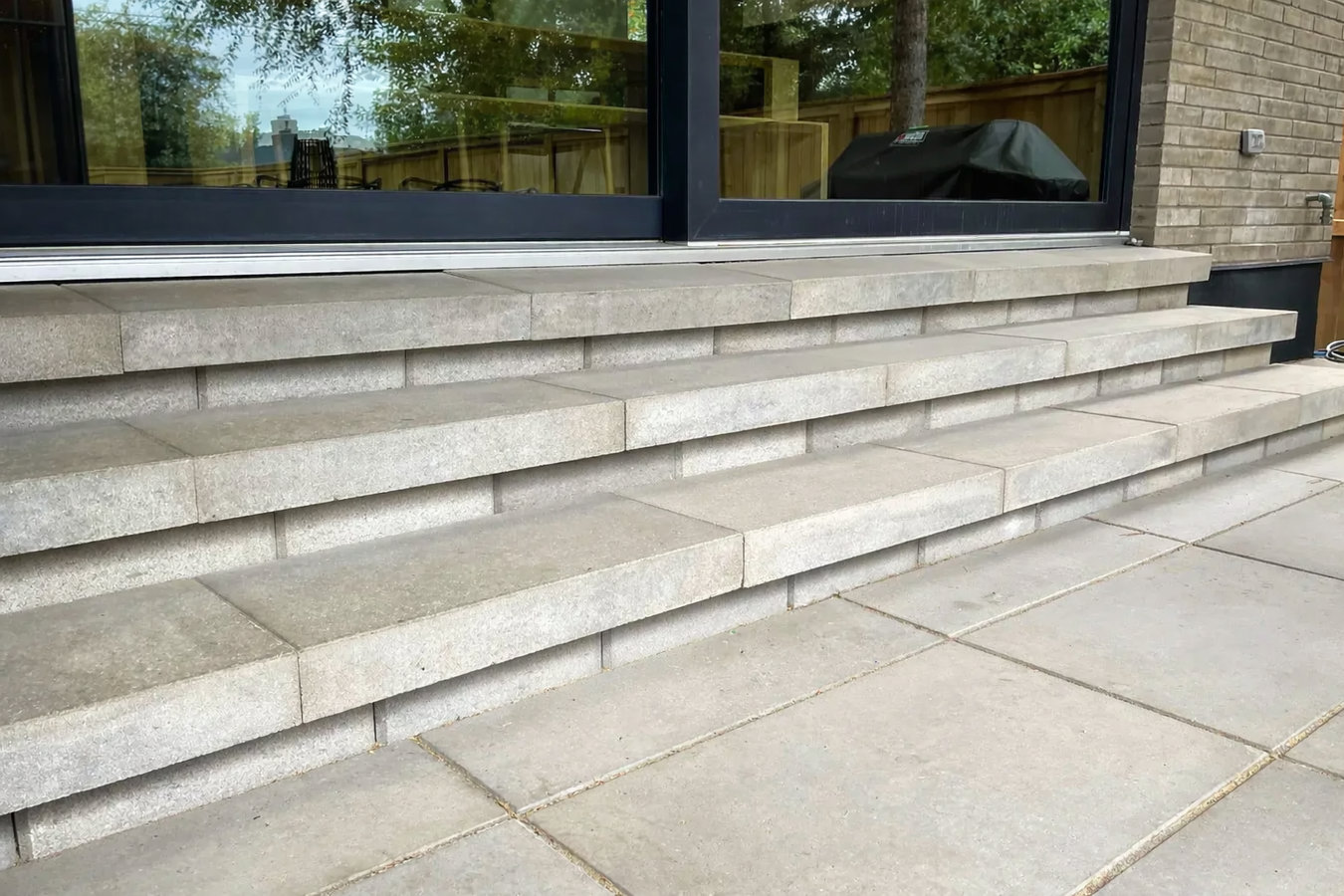
Crumbling, shifting, or slippery steps are a safety problem. We build concrete steps designed to handle Livermore clay soils, rainy winters, and everyday use for decades.
Concrete steps construction in Livermore involves excavating the existing ground, building a compacted gravel base, forming and pouring reinforced concrete steps, and finishing the surface for grip and appearance - most residential projects take one to two days of active work, plus at least a week before the steps are safe to use.
In Livermore's older neighborhoods - many of which were built in the 1960s through 1980s - original front entry steps are now 40 to 60 years old. Steps that age have often reached the end of their useful life regardless of how they look on the surface. The rebar inside has typically rusted and expanded, causing the concrete to crack from within. The base beneath them was rarely built to modern standards, which means they have shifted and settled with every wet and dry season since they were poured.
Homeowners who are replacing steps on a sloped yard often combine the project with concrete retaining walls to level the surrounding grade and create a finished entry that connects the steps to a stable, flat surface on both sides.
Cracks that go all the way through a step, run along the edge, or keep returning after patching are a sign the structure is failing. In Livermore, clay soils that swell in winter and shrink in summer put constant pressure on the base underneath. Small surface cracks can sometimes be patched, but cracks that return after repair usually mean the ground underneath is still moving.
If any step moves when you put weight on it, or if the whole staircase feels like it has shifted away from the house, the base underneath has failed. This is a safety issue for everyone who uses your front entry - children, older family members, and delivery workers included. In Livermore's clay-heavy soil, this kind of settling is common in steps that were built without a proper gravel base.
If you can see a gap where your steps used to sit flush against your foundation or front porch, the steps have pulled away from the structure. Water gets into that gap, worsens the separation, and can eventually affect the foundation itself. This is especially common in older Livermore homes where original steps were not anchored with proper footings.
Livermore gets most of its rain between November and March. If your steps become dangerously slippery every winter - even after scrubbing - the surface texture has worn smooth over the years. This is a fall hazard, particularly for older family members. New steps with a broom finish solve this problem and do not cost extra.
We build new steps, replace failing ones, and widen or reconfigure entries that no longer fit how a home is used. Every project starts with proper excavation and a compacted gravel base - the foundation work that determines whether your steps stay solid for 30 years or start shifting within five. We embed steel reinforcement inside every pour and use a broom finish as the default surface texture, giving you grip underfoot in wet conditions without adding cost.
Homeowners building new construction or adding an ADU often schedule steps together with slab foundation building - having the same crew handle both the foundation pour and the entry steps in a single mobilization reduces coordination overhead and ensures the steps tie into the slab correctly from the start.
For homes that have never had concrete steps, or where existing steps were removed during remodeling.
Best when existing steps are crumbling, cracked through, or have shifted away from the house foundation.
For narrow entry stairs that no longer suit how the home is used, or to improve curb appeal on a wider porch.
Standard texture finish that provides grip in wet conditions without adding cost - the right choice for most Livermore entries.
For homeowners who want their entry steps to complement decorative concrete work elsewhere on the property.
Combined project for sloped entries where both a level grade and safe access between elevations are needed.
Much of Livermore sits on expansive clay soils that swell with winter rain and shrink back in summer heat. That seasonal movement is the main reason concrete steps in this area crack and shift - not age, not normal wear, but ground movement that a properly built base can resist. In established neighborhoods near Livermore - particularly those built in the 1960s through 1980s - original steps were rarely built with a gravel base deep enough to handle that movement. At 40 to 60 years old, most of them have reached or passed the end of their useful life. Replacement is almost always the smarter financial decision compared to repeated patching.
Livermore also sits near several active fault systems in the East Bay, and local contractors build with ground movement in mind - using deeper footings, proper reinforcement, and flexible joints where steps meet the house. We also serve homeowners throughout Dublin where the same soil conditions and permit requirements apply. Summer scheduling matters here too - Livermore's heat requires early-morning pours and active curing management to avoid surface cracking, and we build that into our project planning automatically.
The California Department of Housing and Community Development oversees the state building code that governs step construction, including requirements for riser height, tread depth, and egress safety.
We respond within 1 business day - a real person, not an automated reply. We will ask about your existing steps, how many you need, and schedule a free on-site visit before giving you any numbers.
We assess your existing steps, measure the entry, and walk you through your options for width, finish, and whether the existing structure can be patched or needs full replacement. You receive a written quote with no hidden charges.
We apply for the required City of Livermore permit on your behalf and keep you updated on the timeline. Permit processing typically takes a few business days to two weeks. We schedule the pour to avoid Livermore's peak summer heat when possible.
Demolition of old steps usually takes a few hours on day one. The pour follows once the base is set and forms are built. You stay off the steps for 24 to 48 hours minimum, and we do a final walkthrough before we consider the job complete.
We respond within 1 business day - no obligation, no pressure. After you submit, someone from our office will call to schedule a free on-site estimate at a time that works for you.
(925) 409-3317We have worked on entry step projects in Livermore neighborhoods from the older streets near downtown to the newer subdivisions off Portola Avenue. Understanding the difference in soil depth, lot grading, and permit requirements across those areas means fewer surprises on your project.
We never skip base preparation. Every step project we build starts with proper excavation, soil compaction, and a gravel subbase before a single board of formwork goes in. That base work is what keeps your steps from cracking or shifting when Livermore's clay soil moves.
We manage the City of Livermore permit application from submission to final inspection, and we include it in your written quote upfront. You never have to visit the city building department or wonder whether the paperwork was pulled.
Our contractor's license is verifiable on the California Contractors State License Board website at cslb.ca.gov. We carry liability and workers' compensation coverage on every job, which protects you from any exposure if something goes wrong during construction.
Entry steps are one of the most used parts of your home and one of the first things visitors see. We are happy to walk you through what proper base preparation and reinforcement look like before you decide whether to move forward.
For new construction or additions where a concrete slab and steps need to be built together as part of the same project.
Learn moreConnect terraced yard levels created by a retaining wall with properly built concrete steps on the same project.
Learn moreDon't wait for a fall - call now or submit a request online and we will come to your property for a written, no-obligation estimate.